In September 2023, a jazz musician in Nice sat down inside PatchWorld with a colleague from IRCAM and started playing. Jonathan Bell had been using the platform to explore large sound corpora, patching together concatenative synthesis modules the way you’d wire a modular synth. He wrote it up for the International Computer Music Conference. It was, as far as we can tell, one of the first times a researcher used PatchWorld to make something and then told the academic world about it.
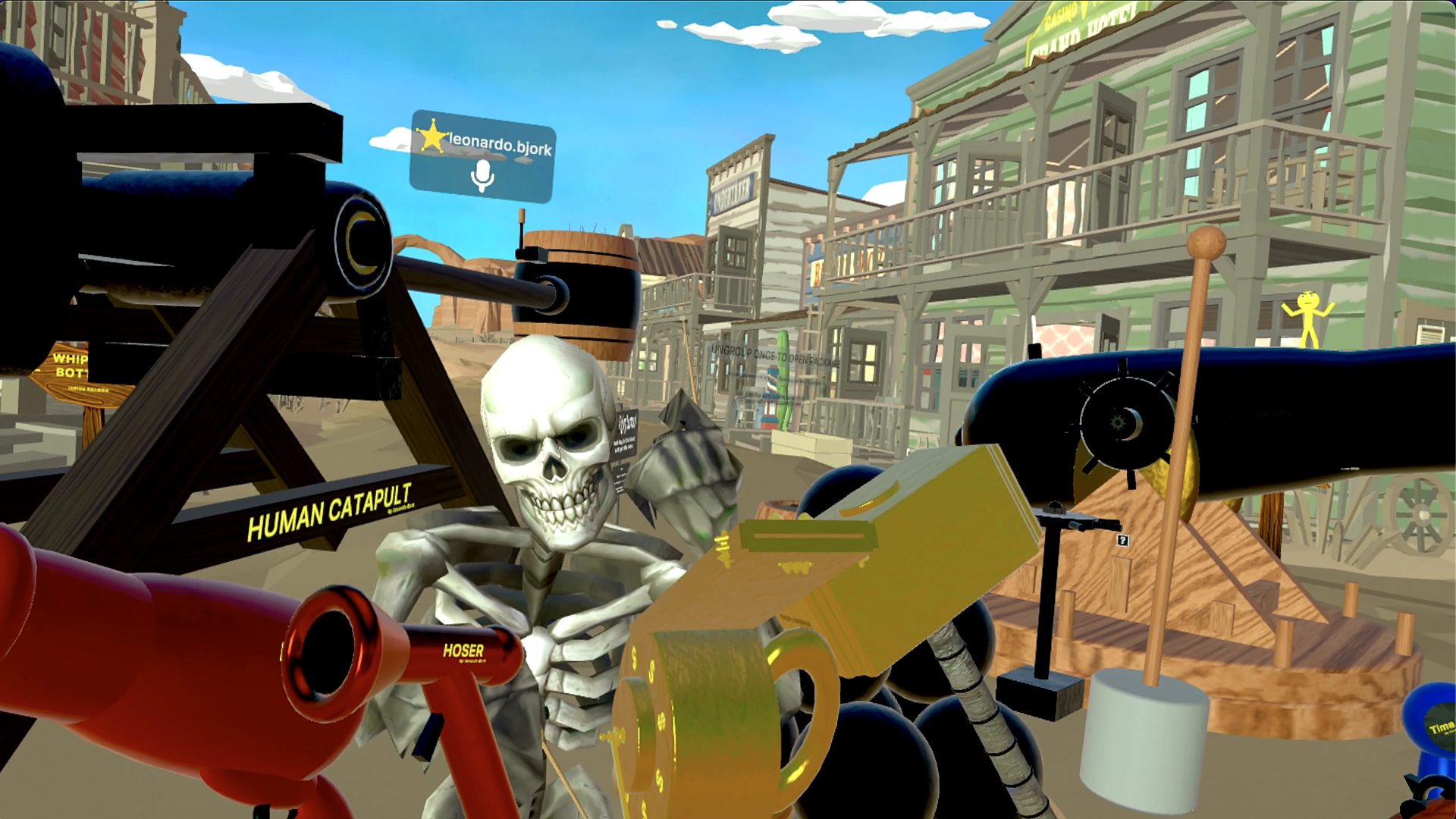
Jonathan Bell performing at the Journées d'Informatique Musicale, across three cities in one shared PatchWorld: Bell in Paris, a pianist in Marseille, and a third musician reading the opening of the Bible in Hebrew from Berlin, all reaching into the same shared sound corpus.
Credit: courtesy Jonathan Bell.
Together with the earlier MuX research that helped shape Patch’s origins, that trail has now become fifty-five publications, from a dozen institutions across six countries, several backed by national research funding in Germany and Italy and by an EU Horizon programme. Three in 2021, eight in 2023, sixteen last year, ten already in the first half of this one. PatchWorld is clearly gaining academic recognition, and there’s a lot to learn from that, so we built a database to track it. That list is now live at patchxr.com/research: every paper we’ve found that cites, studies, or builds inside PatchWorld, with a summary of what each one actually does. We’ll keep adding to it.
With over fifty entries, patterns start to show in why researchers keep coming back. The papers so far cluster into a handful of distinct conversations.
Why researchers compare PatchWorld to Max and Pure Data
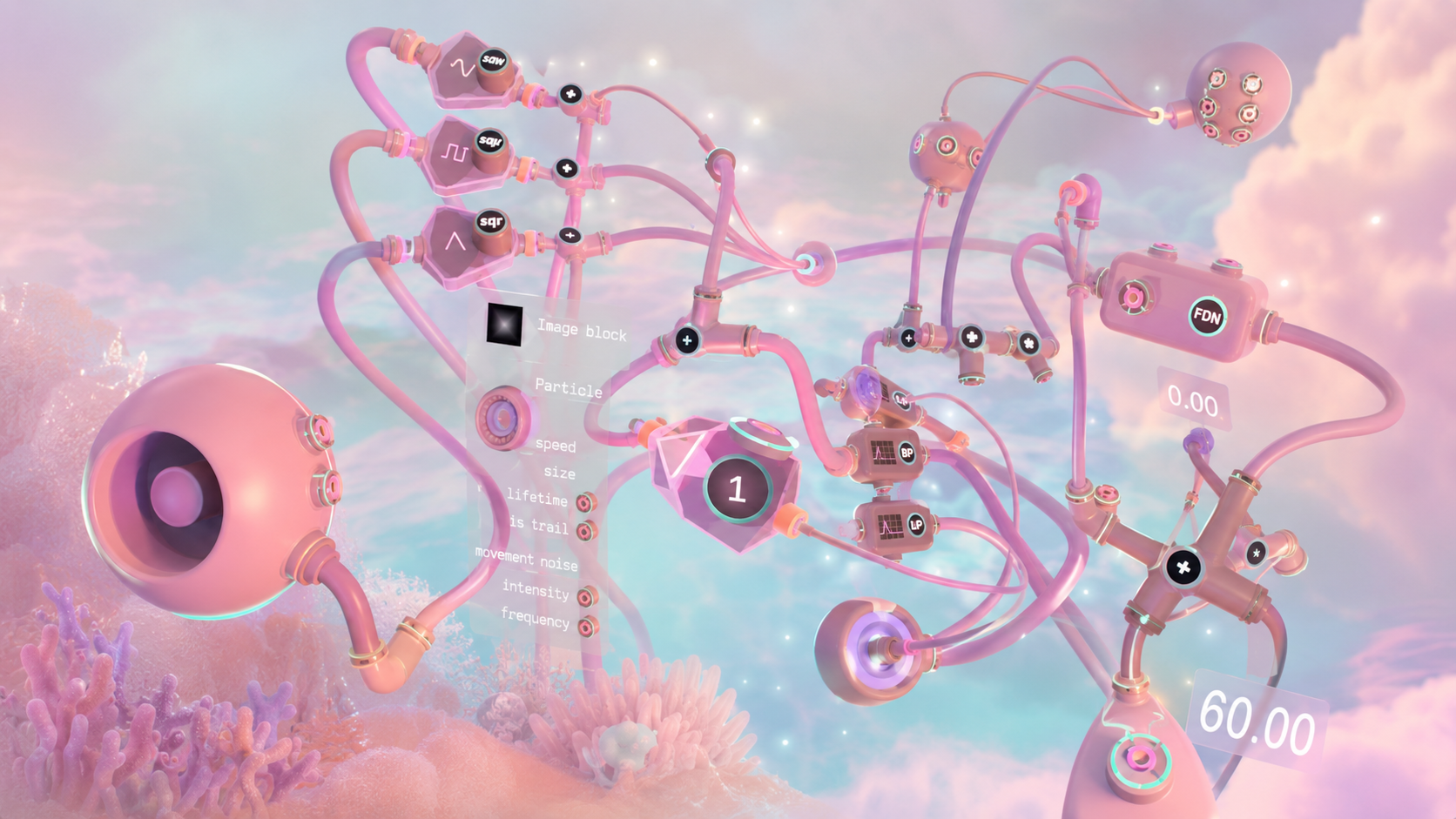
Whether the author is writing about pedagogy, spatial audio, or corpus navigation, PatchWorld keeps getting compared to the same two things. Bell describes the core metaphor as working “in many ways like Max or Pure Data.” The Université Côte d’Azur group calls it a patching paradigm “similar to the one of Cycling ‘74 Max.” A survey on computational arts settles on “a spatial equivalent of visual programming engines.” A master’s thesis at HAW Hamburg goes for two references at once: “heavily inspired by LEGO and Max MSP.”
Related: From Pure Data to PatchWorld: bringing patching into VR at PASE in Venice
That handle matters more than it looks. Computer-music research runs on decades of practice built inside patching environments, so a tool that speaks the language natively is one you can pick up without throwing away your workflow. Bell got a FluCoMa corpus analysis into PatchWorld because the patching logic came with him. The gap between having a research question and having something you can test, usually the part that eats a semester, mostly closes when the interaction model is one you’ve used since you were a student.
Building instruments inside VR, with no external toolchain
The other thing that comes up constantly is self-containment. Instruments get built “entirely within the VR application itself,” as one paper puts it. No engine license, no separate build pipeline that needs somebody with a CS degree to keep it alive. The environment reaches outward when you want it to, over MIDI, OSC, Ableton Link, and a desktop client that runs the same worlds without a headset, but the thing you’re studying can be built and played without ever leaving it.
For a researcher that collapses the distance between an idea and a test. Damian Mills, whose doctoral thesis at Queen’s University Belfast is about accessible VR instrument design, describes what it looks like in practice: a musician inside PatchXR can build a new instrument in the middle of a session, rearrange it, and hand it to somebody else in the room, without ever stopping to switch tools. Try studying that when building the instrument and playing it happen on different software, on different days.
A stable environment for controlled VR studies
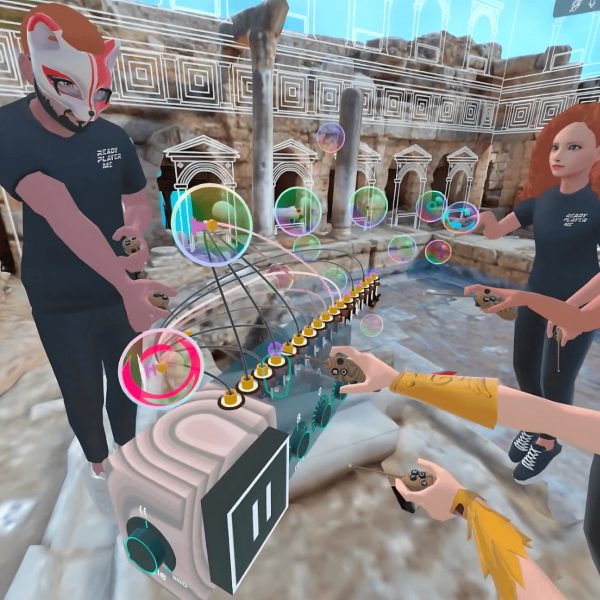
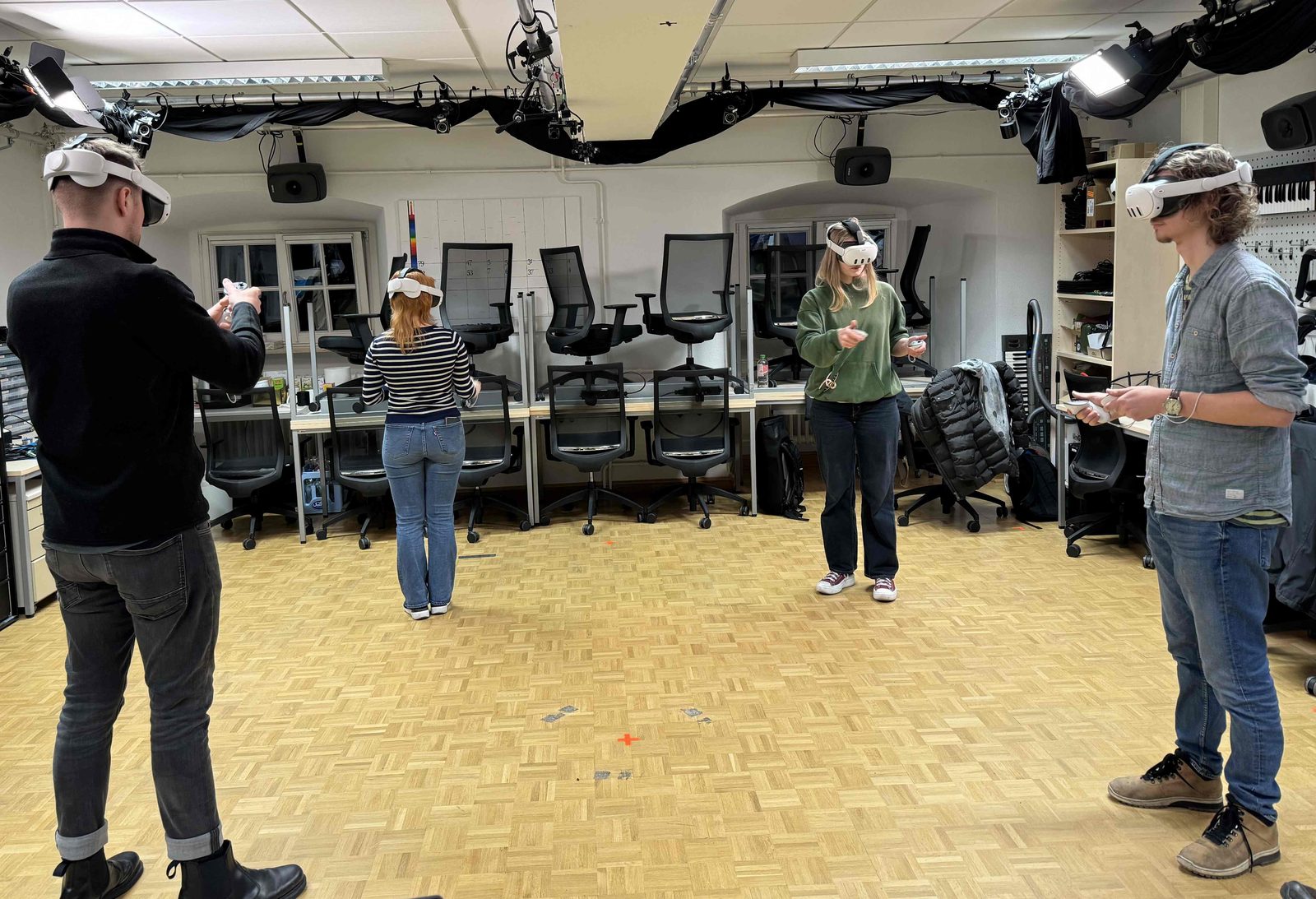
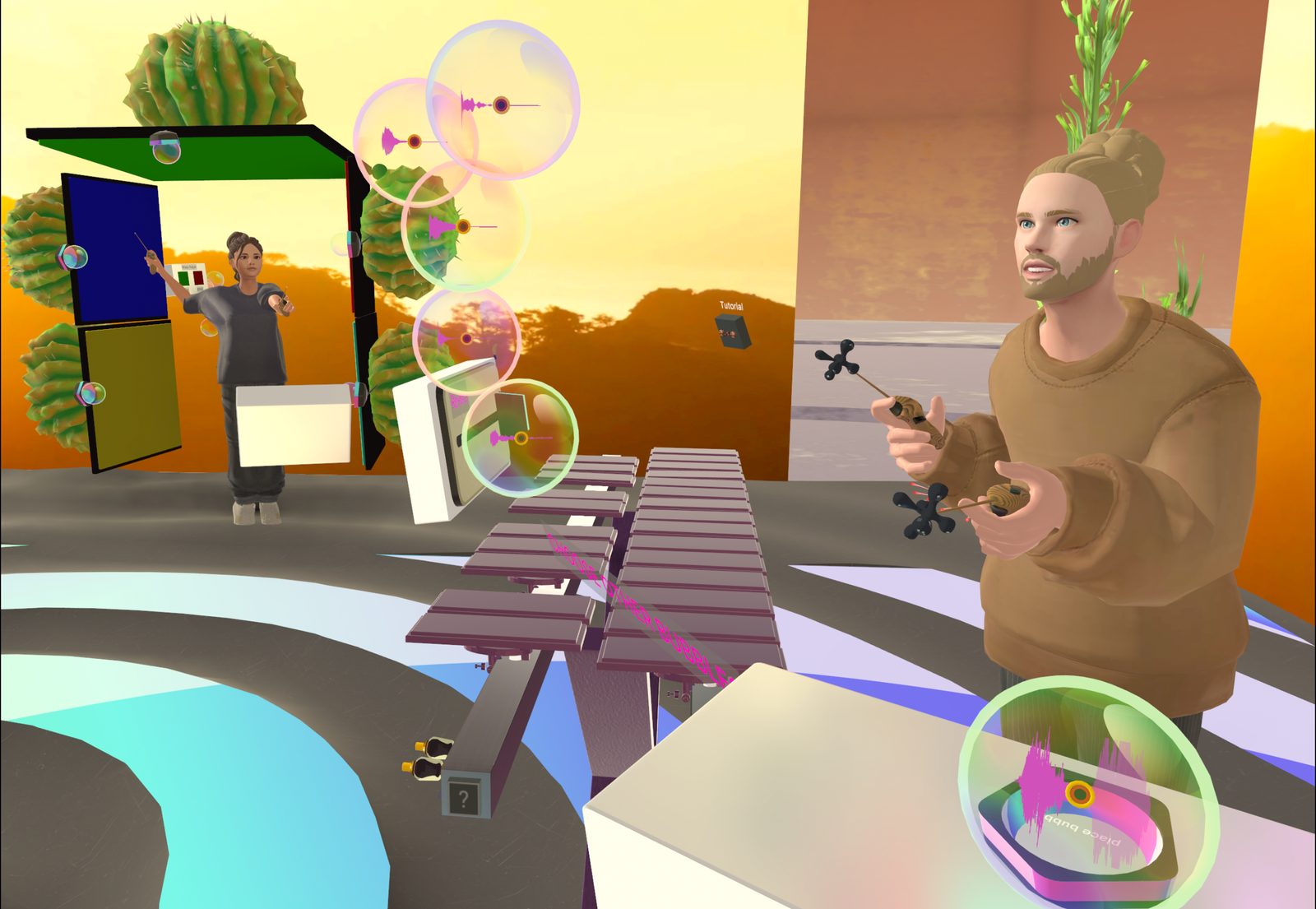
Of everything on that list, one sentence stopped us. The LEVIKO-XR group at Universität Osnabrück, explaining why they chose PatchWorld for a study comparing virtual and mixed reality, write that they picked it because “it allows both VR and MR situations to be realized while keeping other conditions unchanged.”
© LEVIKO-XR (permission required from Leonard Bruns / Michael Oehler).
Credit: PatchXR.
To measure one variable you need everything else to hold still, and most consumer VR won’t let you isolate a single dimension cleanly enough to try. Because the same collaborative music task could be rebuilt across VR and mixed reality, same room and separate rooms, with nothing else shifting underneath it, the comparison was possible at all.
Osnabrück has built a whole series of studies on that foundation, and one result keeps surfacing: when people can simply talk to each other, unmediated, they report more presence and better learning than any hardware configuration delivers. The worst condition they tested wasn’t distance. It was two people standing in the same room wearing headsets and speaking through microphones, where a few milliseconds of latency quietly wrecked a conversation that should have been effortless.
Related: Teaching Music Inside Virtual Worlds
How PatchWorld structures collaboration: ownership, roles, and permissions
Multiplayer is the obvious answer, and the one people mean least literally. Co-presence is easy to build and boring to study. What’s interesting is who can do what, who owns the thing that just got made, and what happens when control passes from one pair of hands to another.
The most detailed account of how PatchWorld handles this comes from Adam Mir-Sadjadi, Michel Buffa, Marco Winckler and Florent Robert at Université Côte d’Azur, in a 2026 review of user roles in collaborative VR music-making: worlds that somebody owns, public or private, shared at View, Edit, or Open for Edit, with a live-session menu governing who gets to speak, touch, and change what.
Buffa’s team has published seven papers in our list while building WAM Jam Party, a browser-based patching environment of their own. They reference PatchWorld as prior art and as a point of comparison.
Because those rules live in the permission model, questions about authorship and control become testable rather than theoretical. Which is why PatchWorld turns up in places with nothing to do with engineering: a Hamburg dissertation on the aesthetics of sound in VR, an Organised Sound article on modular synthesis as cultural practice, a forthcoming IEEE ethics framework that uses it as the worked example for who owns a patch built inside somebody else’s world.
Accessible VR instruments, built around the musician
A physical instrument asks the player to fit it. Strings sit at a fixed height, keys need a certain reach, a drum kit assumes a particular body in a particular posture. When that doesn’t work, the usual fix is to bolt something on: a mount, a modification, a workaround.
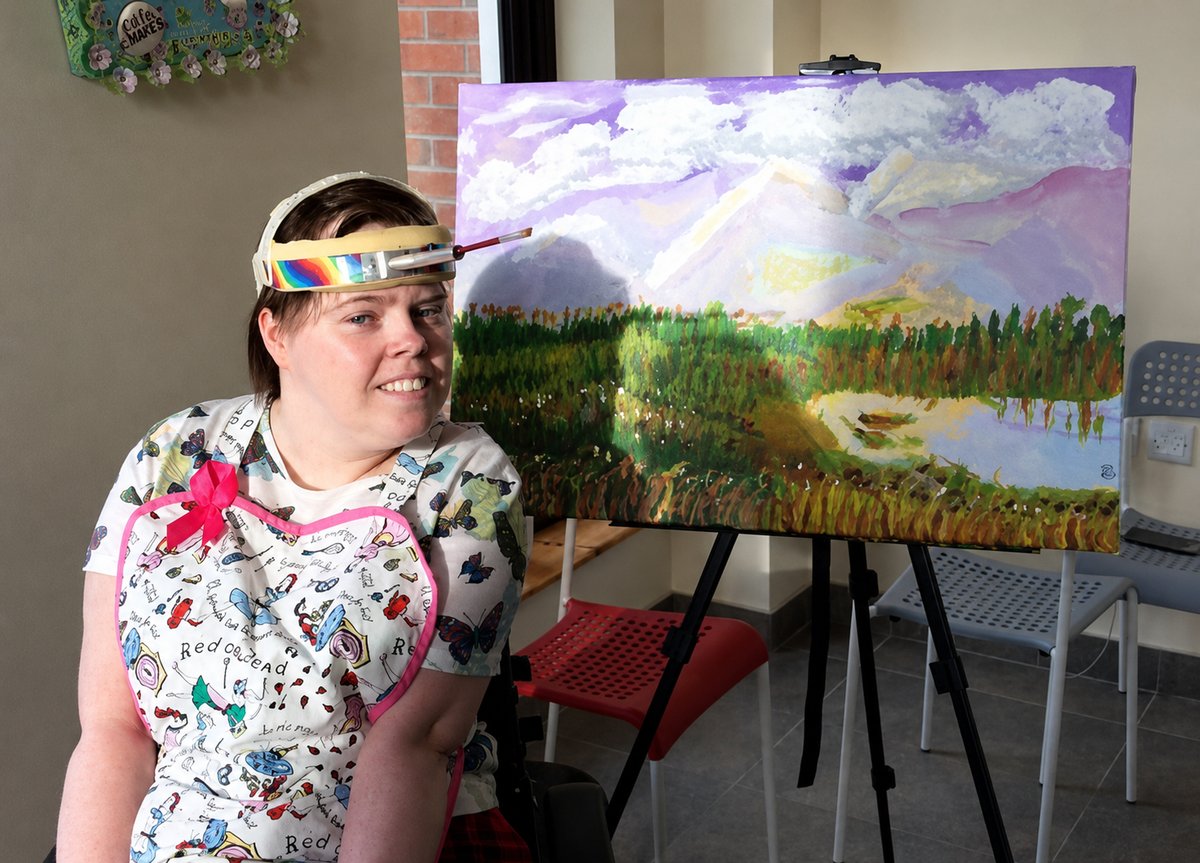
A virtual instrument carries no such obligation. It has no weight and no fixed geometry, so the interaction can be moved to the player instead of the other way round. That’s the argument running through Mills’s thesis, which uses PatchWorld repeatedly as a reference point: modular widgets rearranged around whoever is playing, and a multiplayer layer where a facilitator can hold part of a system while the musician keeps the artistic decisions.
Retrofitting accessibility onto an instrument that already exists is a known problem with known answers. What nobody has shown yet is what disabled musicians would build if the instrument were theirs from the start.
From research subject to research partner
Put it together and you get a familiar interaction model, a build environment with no outside dependencies, enough stability to run a controlled comparison, and enough structure to make collaboration itself measurable. That combination is rare enough that music educators, accessibility researchers, HCI people, cultural theorists and ethicists have all arrived at the same tool, and those fields agree on almost nothing else.
There’s a reason music keeps drawing this attention, and it isn’t sentiment. Music is unforgiving. A few milliseconds of latency ruins an ensemble. A missed cue is audible to everyone at once. Presence either exists or it doesn’t, and no one has to be asked whether they felt it. Most collaborative software can hide its failures behind a slightly awkward pause. Music can’t. That makes it a brutal test case, and it’s why findings from a VR music study travel: if you can hold an ensemble together across three cities, remote teaching and distributed work are easier problems.
Lately the relationship has started running both ways. Alberto Boem, Stavros Skouras, Gad Baruch Hinkis, Mélodie Mousset and Luca Turchet ran a co-design process inside PatchWorld with our own community this year, as part of the EU-funded MUSMET project, and presented it at NIME 2026 in London.
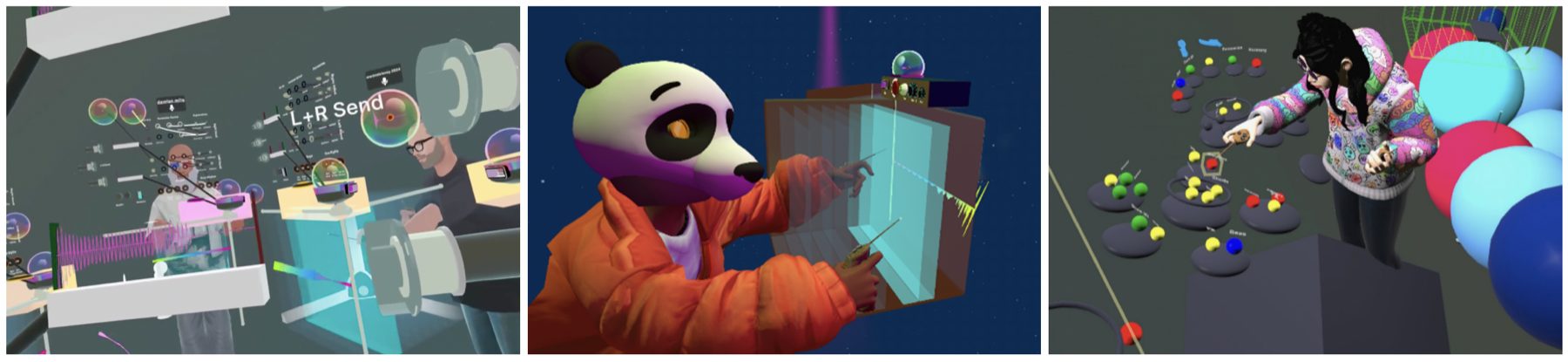
Two sessions, filmed from the first conversation through to testing. The first asked what a VR instrument for collaborative rhythm-making should be, and produced a design we then built and shipped: the Universal Rhythm Box. The second had participants build and occupy spatial layouts for mixed-skill groups, which surfaced a genuinely surprising result. Once people stood in the space at full scale, five musicians turned out to crowd it, avatars blocking each other’s sightlines; three was the sweet spot, close enough that everyone could see each other’s gestures and the shared waveform displays. That kind of finding only shows up when you can build the instrument, the room, and the ensemble in one place and then stand inside it. PatchXR now leads the user-centred design work package inside MUSMET, and the tool researchers reached for on their own has become something a few of them are shaping directly.
That’s the direction we want to keep going. If you’re designing a study on presence or collaboration in VR, teaching music, sound design or new media art and wondering where AI and XR fit, or you need a technical partner for a pilot, there’s a five-year track record here to build on, and a team that would rather work with you than hand you a licence.
The full list lives at patchxr.com/research: fifty-five papers, checked against the originals, growing as we find more. If your work belongs on it and isn’t there yet, tell us.
Frequently asked questions
Is PatchWorld used in academic research?
Yes. As of 2026, PatchWorld and PatchXR appear in 55 peer-reviewed academic publications, including conference papers, journal articles, and PhD theses, across music technology, human-computer interaction, music education, accessibility, and the Musical Metaverse. The full verified list is maintained at patchxr.com/research.
What universities study PatchWorld?
Research involving PatchWorld has come from Universität Osnabrück, Queen’s University Belfast, Université Côte d’Azur, the University of Trento, IRCAM, Aalborg University, and others, published at venues including NIME, CHI, the IEEE International Symposium on the Internet of Sounds, ICMC, and the journal Organised Sound.
Can PatchWorld be used for XR music education?
Yes. The EU and BMBF-funded LEVIKO-XR project at Universität Osnabrück has built teacher-training units and run multiple classroom studies inside PatchWorld, using it for collaborative composition, sample manipulation, and ensemble music-making, mapped to established pedagogical frameworks such as TPACK.
Can PatchWorld be used to design accessible VR musical instruments?
Yes. Because instruments in PatchWorld are modular and can be rebuilt around the individual musician rather than requiring the musician to adapt to a fixed physical form, researchers, including a doctoral thesis at Queen’s University Belfast, have used it to prototype accessible VR musical instruments.
Is PatchWorld only a VR platform?
No. PatchWorld is a cross-platform immersive creative tool. It runs in VR and mixed reality on headsets, has a desktop client, and connects to external gear and software over MIDI, OSC, and Ableton Link, so it fits into existing music-production workflows rather than replacing them.
How can I get my research added to the PatchWorld research page?
If you have cited PatchXR, studied PatchWorld, or built something with the platform or its community, contact PatchXR and we will review it for inclusion on the research page.