How PatchWorld Is Expanding Music Education in XR
What happens when future music teachers step into the same virtual world to build instruments and compose together in real time?
This question was explored in the LEVIKO-XR research project, led by Leonard Bruns and Tobias Rotsch at the University of Osnabrück and the State University of Music Trossingen, where university students preparing to become music teachers took part in immersive music workshops.
The project investigates how immersive environments can reshape music education by allowing students to manipulate sound spatially, collaborate inside shared virtual spaces, and approach music production in new ways.
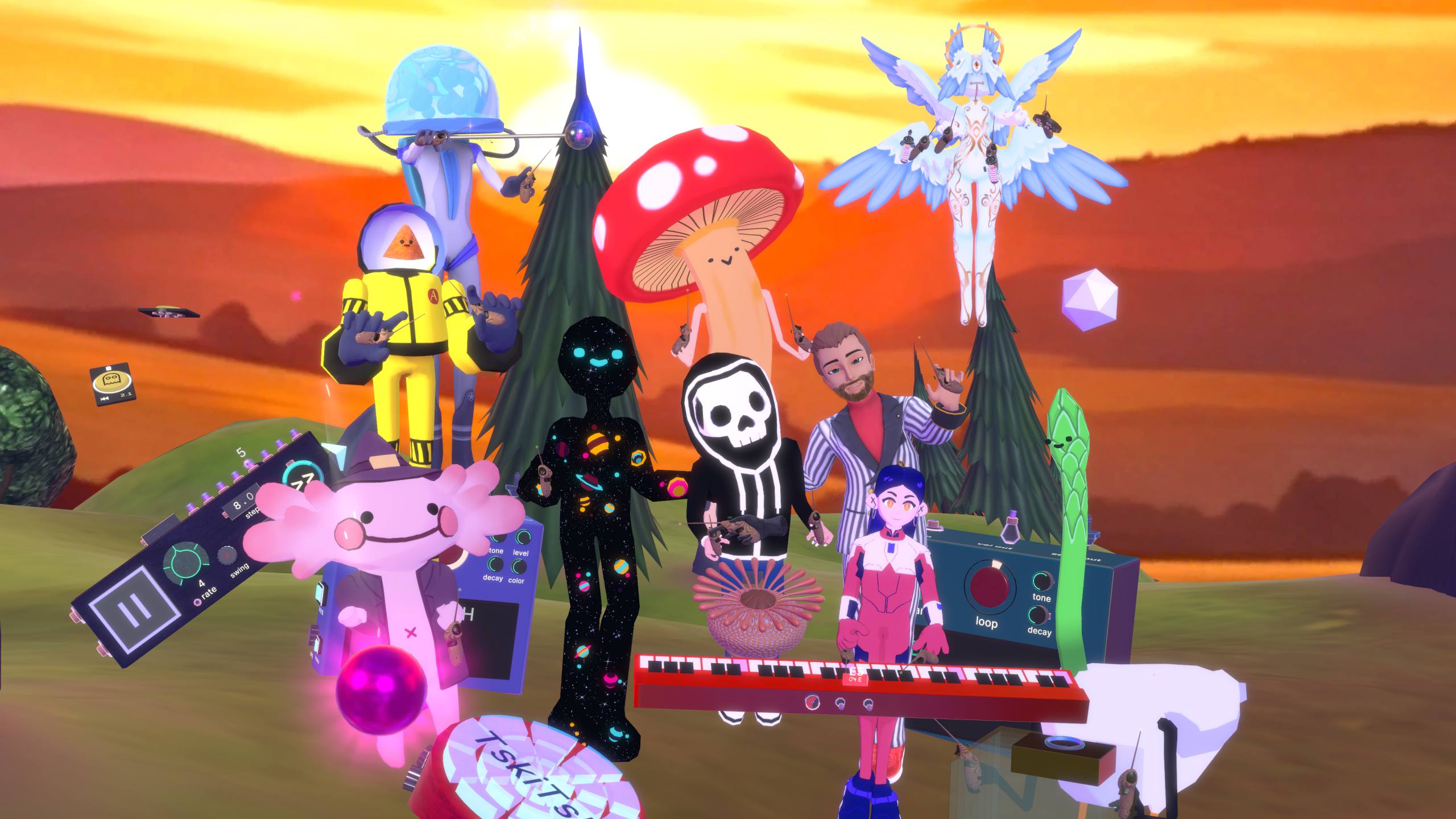
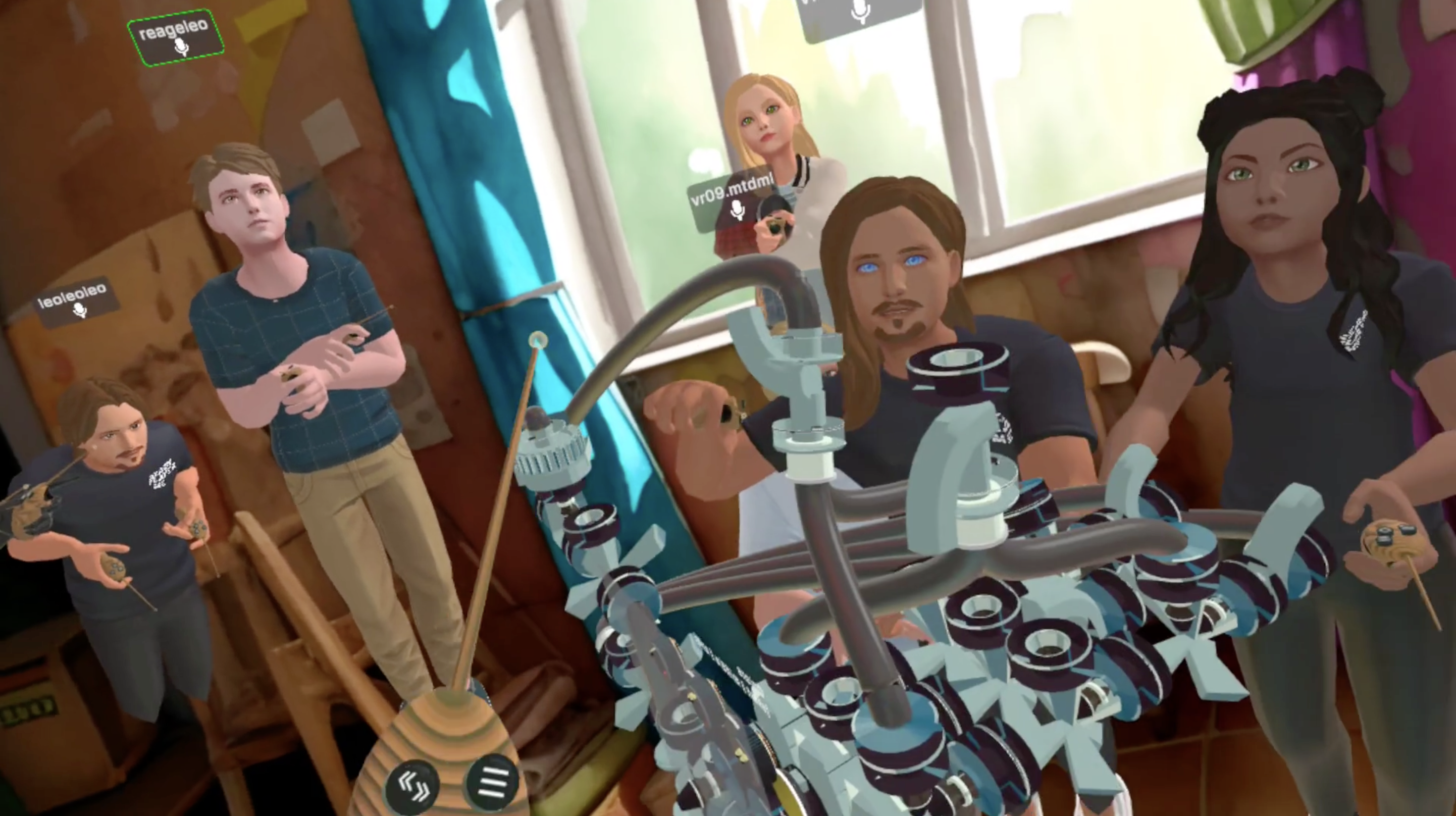
At the center of these workshops was PatchWorld, our collaborative VR environment where users can play and create instruments, compose music inside shared spaces, and build interactive audiovisual worlds together.
A Changing Landscape for Music Education
Music education has always evolved alongside technology. From recording studios to digital audio workstations, each new tool has reshaped how musicians learn, compose, and collaborate.
Today, many students encounter music not only through traditional instruments, but through production tools, sound design, and digital composition environments. Software platforms such as Ableton Live or Logic Pro have become central to contemporary music-making and music learning.
Yet these tools, while powerful, can also create a certain distance between the musician and the sound. The interface often lives on a screen, the interaction takes place through a mouse and keyboard, and collaboration is frequently limited to file sharing rather than real-time creation.
Immersive environments offer a different possibility: digital music creation as something spatial, embodied, and social.
Music as a Spatial Exploration
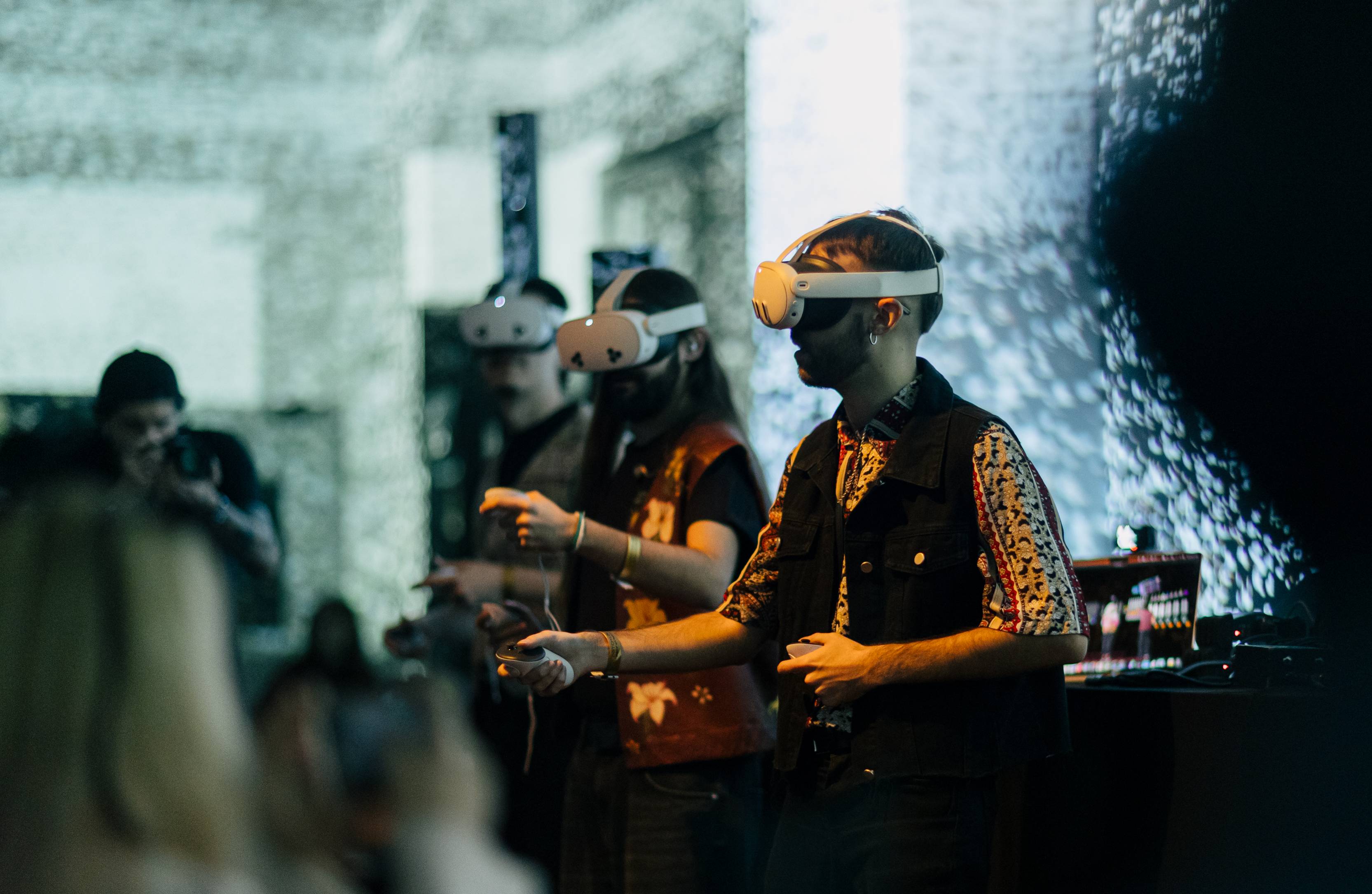
Inside immersive environments, sound becomes something that users can interact with physically, using their hands and bodies in space.
Instead of adjusting parameters on a screen, participants can manipulate instruments directly in the space around them. Sounds can be triggered, shaped, and combined through gestures and spatial interaction.
This type of interaction supports what researchers describe as embodied learning " learning through physical interaction and direct manipulation of sound “.
For many students, this dramatically changes the experience of music production. Rather than navigating complex software menus, they engage with sound through movement and gestures.
The LEVIKO-XR Workshops
As part of the LEVIKO-XR research project, students took part in experimental workshops exploring how immersive environments could support new forms of musical learning.
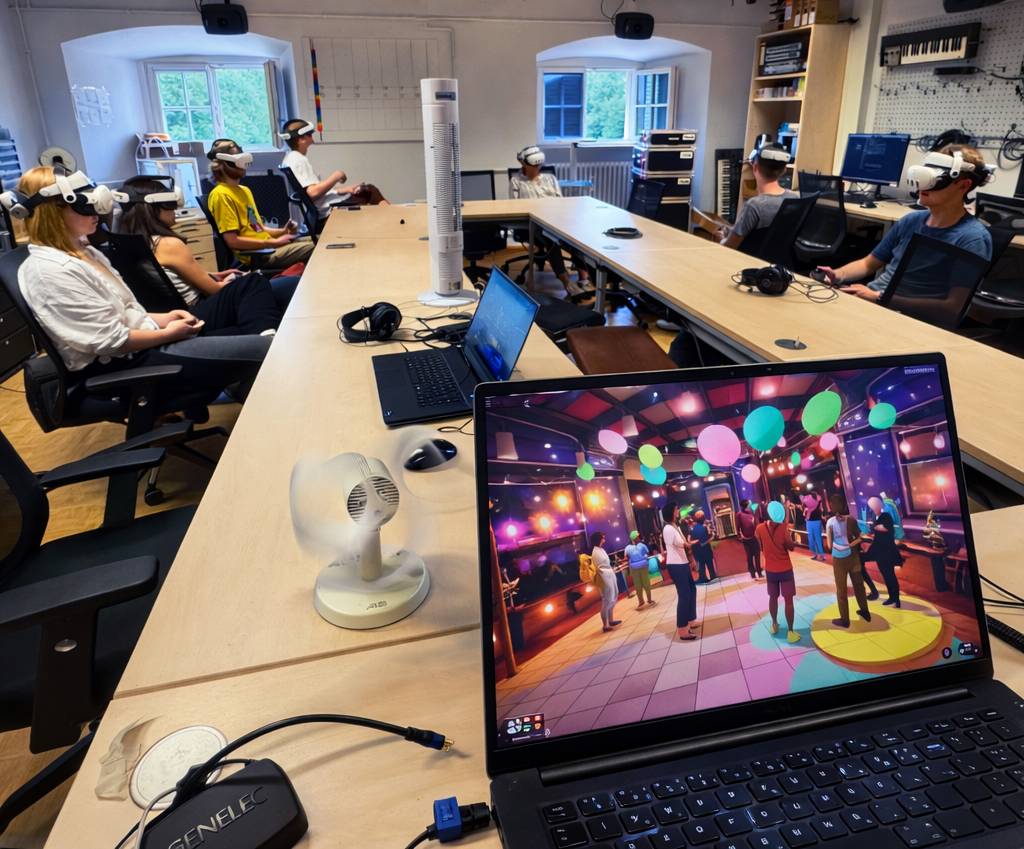
They gathered in the same classroom, each wearing a VR headset and entering the shared PatchWorld environment together. While they were physically co-located, the teaching itself happened inside the virtual space. The sessions were facilitated remotely by Todd Fadel, a multifaceted artist, primary school music teacher in Portland, and long-time PatchWorld community member who has been using hosting weekly creative workshops in PatchWorld since a few years already.
The workshop began with a short onboarding phase where students learned how to navigate the environment and interact with sound objects. Once comfortable, they moved to the central creative exercise: “inventing music for mood clips.”
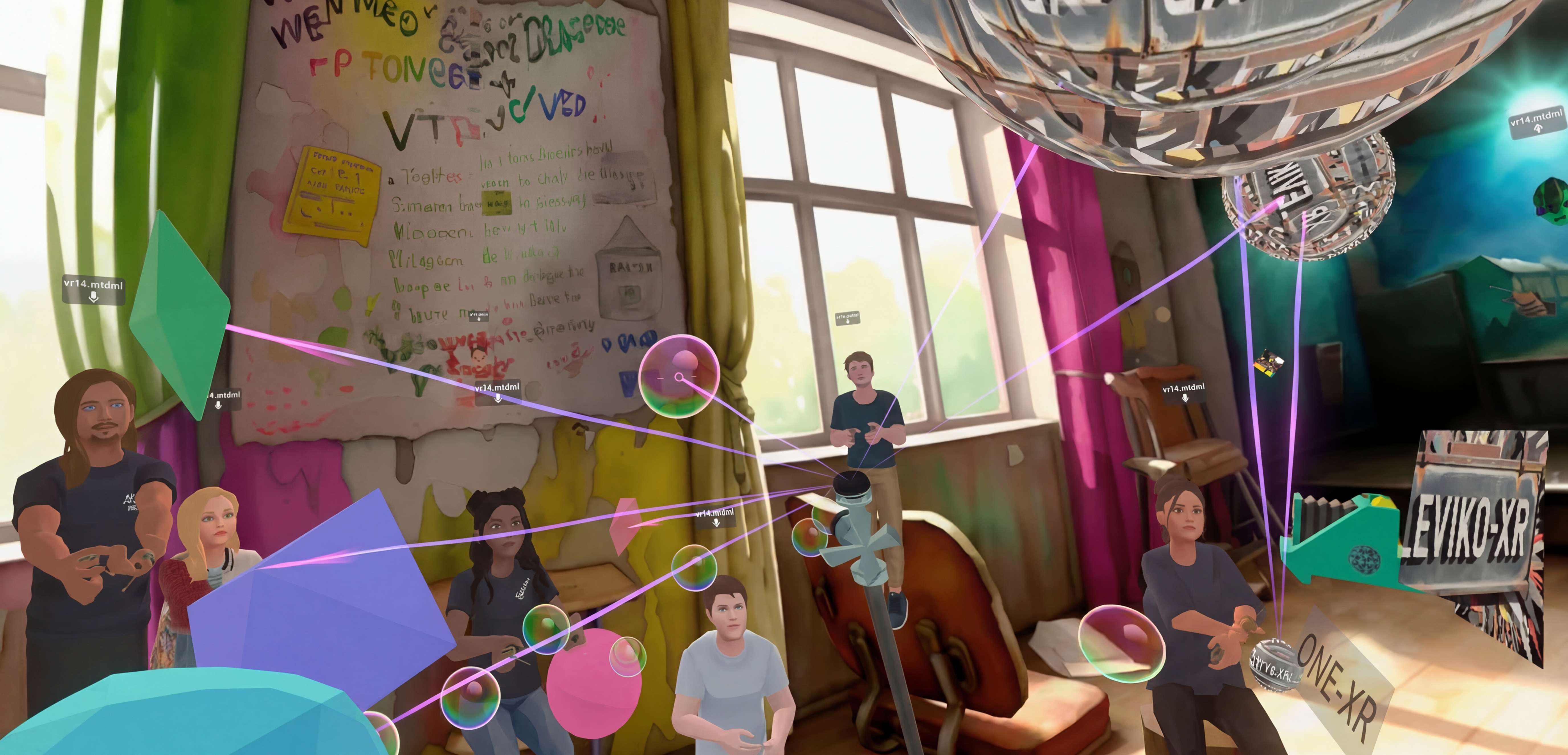
This activity took place in a PatchWorld environment called Klangkino (“sound cinema”), where students watched short video clips and collaboratively created soundtracks that matched their emotional atmosphere.
The world included several virtual instruments, such as a vibraphone-like keyboard with adjustable samples and reverb and a curved drum-pad setup arranged around the players. Participants worked with rhythm, texture, and spatial sound, shaping ideas together and responding to each other’s musical gestures in real time.
For Todd, the most memorable moments came from the students’ spontaneous discoveries.
“I loved watching them discover simple things, like a parameter in a device that suddenly made an unexpected sound,” he recalls. “Those little discoveries often sparked laughter and curiosity across the whole room.”
In this way, the workshop shifted the focus of music education from learning fixed techniques toward creative experimentation and collective discovery.
Collaboration as a Core Learning Experience
One of the most striking aspects of the workshops was the way collaboration emerged naturally within the virtual space.
Participants could see each other’s avatars, interact with shared instruments or even invent them on the fly. Instead of working individually and combining their results later, students created music together in real time.
For many participants, this experience felt closer to a collective jam session than a traditional classroom exercise.
This social dimension is a powerful driver of creative learning. When students can observe and influence each other’s work directly, the learning process becomes dynamic and interactive.
Ideas evolve collectively, and musical structures emerge through continuous interaction between participants, this collaborative dimension became one of the most engaging aspects of the entire experience.
Making Music More Accessible
Another interesting observation from the workshops was how immersive environments can make music creation more accessible.
Traditional production software often requires prior technical knowledge and familiarity with complex technical concepts such as signal routing, plugin chains, or automation systems. While these tools offer immense creative power, they can also be intimidating for beginners.
In contrast, spatial environments allow participants to interact with musical systems more intuitively. Objects can be grabbed, moved, scaled and connected directly in space.
This lowers the barrier to entry: beginners can quickly start shaping sounds and participating in musical processes, while more experienced users can build increasingly sophisticated systems.
As researcher Leonard Bruns observed:
“Students with a lot of prior technical knowledge can construct complex patches fast. On the other hand, students with less expertise lean into the graphical and artistic tools. This spectrum showed us that PatchWorld can work for very different types of learners with very individual goals and creative visions.”
The researchers also noticed that this accessibility encourages a playful approach to learning. Students often tried unexpected combinations, adjusted parameters freely, and reacted to the sonic results in real time.
Because mistakes carry little risk in virtual worlds, curiosity becomes part of the learning process. Instead of focusing on mastering complex software first, students begin by engaging with sound directly, allowing musical ideas to emerge through real-time experimentation.
As Bruns summarizes, PatchWorld offers something that traditional music tools rarely provide:
“PatchWorld enables an embodied, playful, and collaborative approach to music-making that lets learners create and experiment freely beyond the physical and conceptual limits of traditional instruments and classroom settings.”
The Future of Music Learning
Music education is entering a period of transformation, but despite the enthusiasm surrounding immersive music creation, several challenges remain before tools like PatchWorld can be widely adopted in formal music education. As researcher Leonardo Bruns notes, professional development sessions with teachers revealed a complex landscape. Many educators still lack familiarity with contemporary music production practices, some others face structural constraints related to XR hardware in schools. In some cases, teachers also express skepticism toward XR technologies, worrying that traditional music lesson content might be replaced. As a result, immersive tools currently resonate primarily with a subset of educators already open to experimentation.
Yet the long-term outlook remains promising. Bruns argues that as immersive environments become easier to access and more widely understood, their appeal will continue to grow. “The better people can immerse themselves, independent of location, into an environment where they have such fantastic opportunities for music-making, the more appealing it becomes to meet there,” he explains.
Research projects like LEVIKO-XR offer an early glimpse of what this future might look like.
If you’d like to read the full research paper (in German), you can find it here:
https://www.medienpaed.com/article/view/1997
If you’d like to explore creating music inside immersive worlds yourself, you can learn more about PatchWorld here:
https://patchxr.com