Over the past month, PatchWorld has quietly undergone one of its biggest evolutions. From hundreds of blocks leaving beta to new gameplay systems and fully customizable locomotion, this update massively expands what you can create.
Share this
Over the past couple of months, we’ve quietly shipped one of the biggest evolutions in PatchWorld.
You might have already felt it while exploring the app, building things, jamming with friends, or just hanging out.
New onboarding.
New landing world.
The patching system, with hundreds of blocks, is finally out of beta.
New gameplay blocks. A redesigned library and marketplace.
Custom avatars. New locomotion. And a lot more…
PatchWorld can still improve a lot. But after 7 years of development, it’s starting to feel… complete.
Everyone who has been creating in the app recently will tell you the same thing:
these latest updates are a game changer.
It’s never been this nice to create.
PatchWorld just got… kind of unlimited.\
🎛️ So what is the Patch Block System?
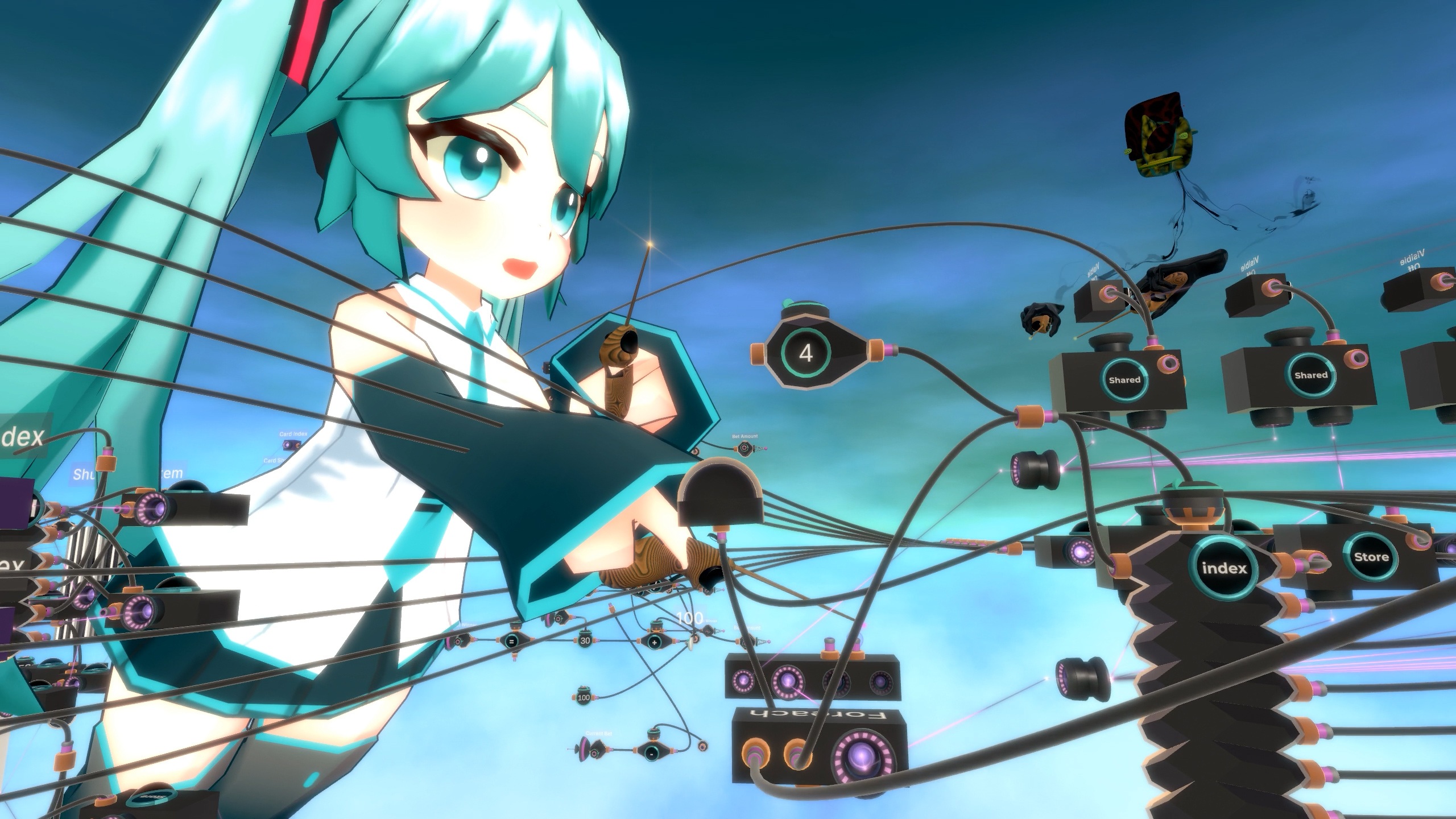
If you’re new to PatchWorld, you might not know that Everything in PatchWorld is built inside PatchWorld using these blocks. It’s like a node-based system, but 3D and VR-native.
It’s how people create instruments, real-time visual effects, toys, weird machines, entire worlds, and now even games.
The BIG NEWS: After years of building this with the community, the Patch Block system is finally out of beta and in a very solid place.
If you haven’t opened PatchWorld in a while, you should.
The whole system feels different.
We moved away from the old “crazy inventor / steampunk” style toward something cleaner, smoother, more consistent and easier to read.
Some of you might feel nostalgic about the old look as it was very sculptural and unique.
But this new system is much more efficient and that’s important!
This means you can now build way larger patches, more complex worlds, and use more devices at once… without burning your CPU.
So yes, this is a BIG deal!!!
We’ll soon publish a series of articles diving deeper into each block category, but here are some of the completly new categories:
🎮 New Gameplay Blocks - Yes you can make games!!!
This update introduces a new Gameplay Block family, opening the door to more interactive experiences and playful worlds.
Creators can now build systems that:
Detect when players enter or leave areas
React to player actions
Process text and logic events
Store shared online variables such as scores or persistent values
This might sounds technical but to summarize, with these gameplay blocks (and physics), you can build mini-games, quests, and interactive systems.
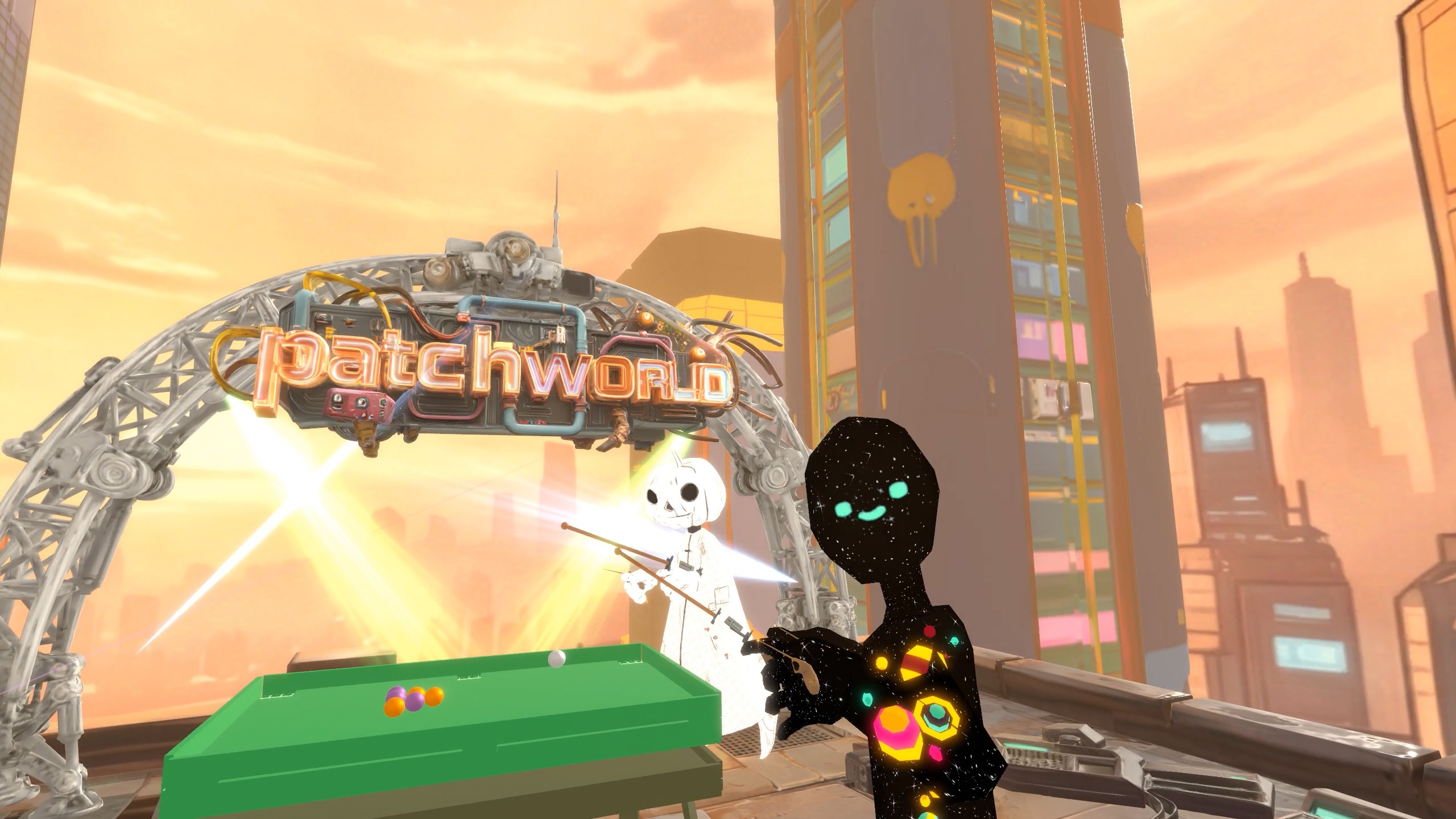
We’re already seeing people build a pool table, obstacle courses, and even a Texas Hold’em table inside PatchWorld 👀
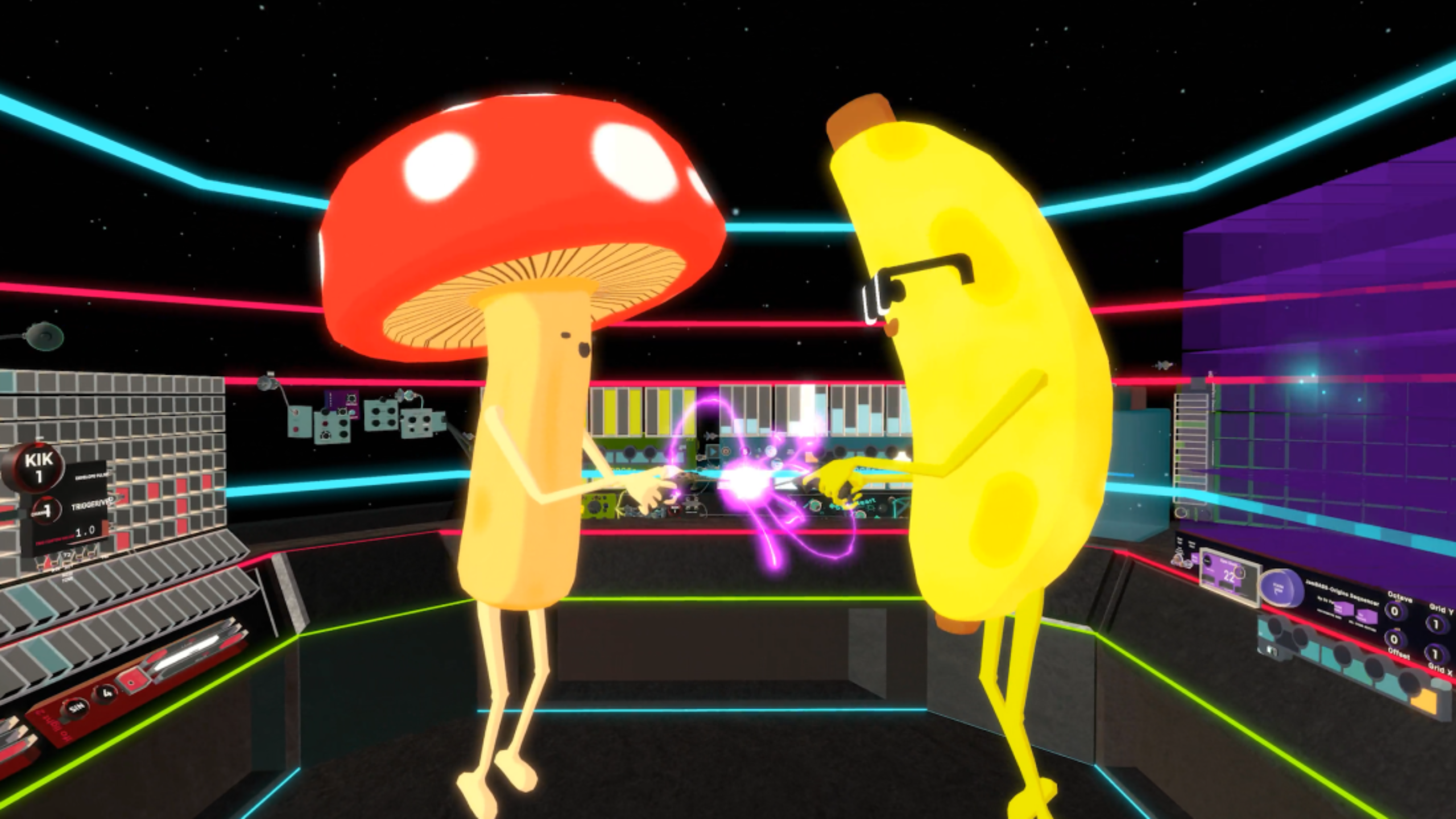
🧥 Patch your body into the system!!! Wear Costumes
One of the most fun additions is Costumes.
These are wearable devices you can attach to your avatar.
But they’re not just visual.
Because they are patchable, they can connect to the system and react to music, triggers, movement, or gameplay events..
🛫 Movement You Can Design
Movement in PatchWorld is becoming just as customizable as everything else.
We introduced a new locomotion system called Jetpack Mode.
Just look where you want to go and push the left joystick forward to glide smoothly through the world.
It’s simple, surprisingly fun, and makes exploring large environments much easier that wiht the swiming system ( still availabel int he menu)
AND… Locomotion is also no longer limited to built-in movement systems.
Now it’s possible to design and control ways of moving through worlds using the patching system.
We built a device called Gravity Boots, which modifies walking movement using physics. By making the player physical and applying forces with the Field Block, creators can design fully custom walking behaviors and new types of movement.
For examples:
Make Physical + Field Block → custom walking physics
Raycast + Set Position → teleport systems
Force fields → jump pads, push zones, moving platforms
Where you learn how to Patch?
In the landing world, you’ll see an arch, it’s a portal to the Patch Academy.
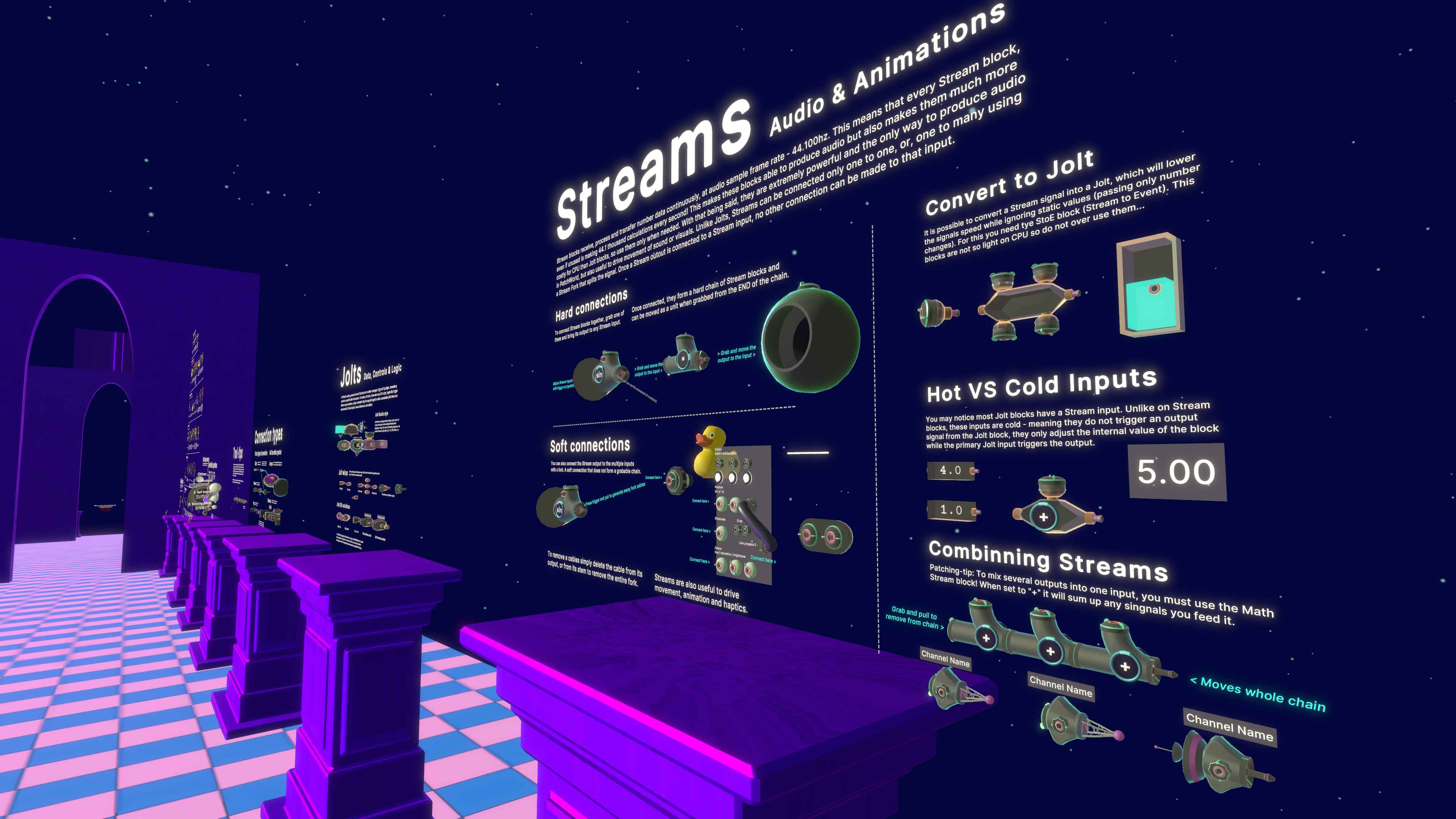
Click it and you’ll enter “The Bridge of Basics” It’s a space filled with stations where you can explore how patching works.
The Patch Academy is like an interactive book you move through.
You don’t just read, you try things.
It is just the beginning, we’ll keep expanding it.
You can also find many interactive tutorials directly in the Library.
And we’ve created a Wiki connected to the app, where you can even contribute and edit tutorial cards:
Patch Academy lets you learn by walking through systems and experimenting directly in VR.
📦 We have redesign a Better Asset Library
Managing your creations should feel as good as building them.
The Asset Library has been redesigned to make it easier to find what you’re looking for, discover other creators’ work, organize your projects, and publish or even sell your creations.
New features include:
custom folders for organizing projects
bulk actions for managing large collections
custom thumbnails for private assets
easier discovery of community creations
and much more…
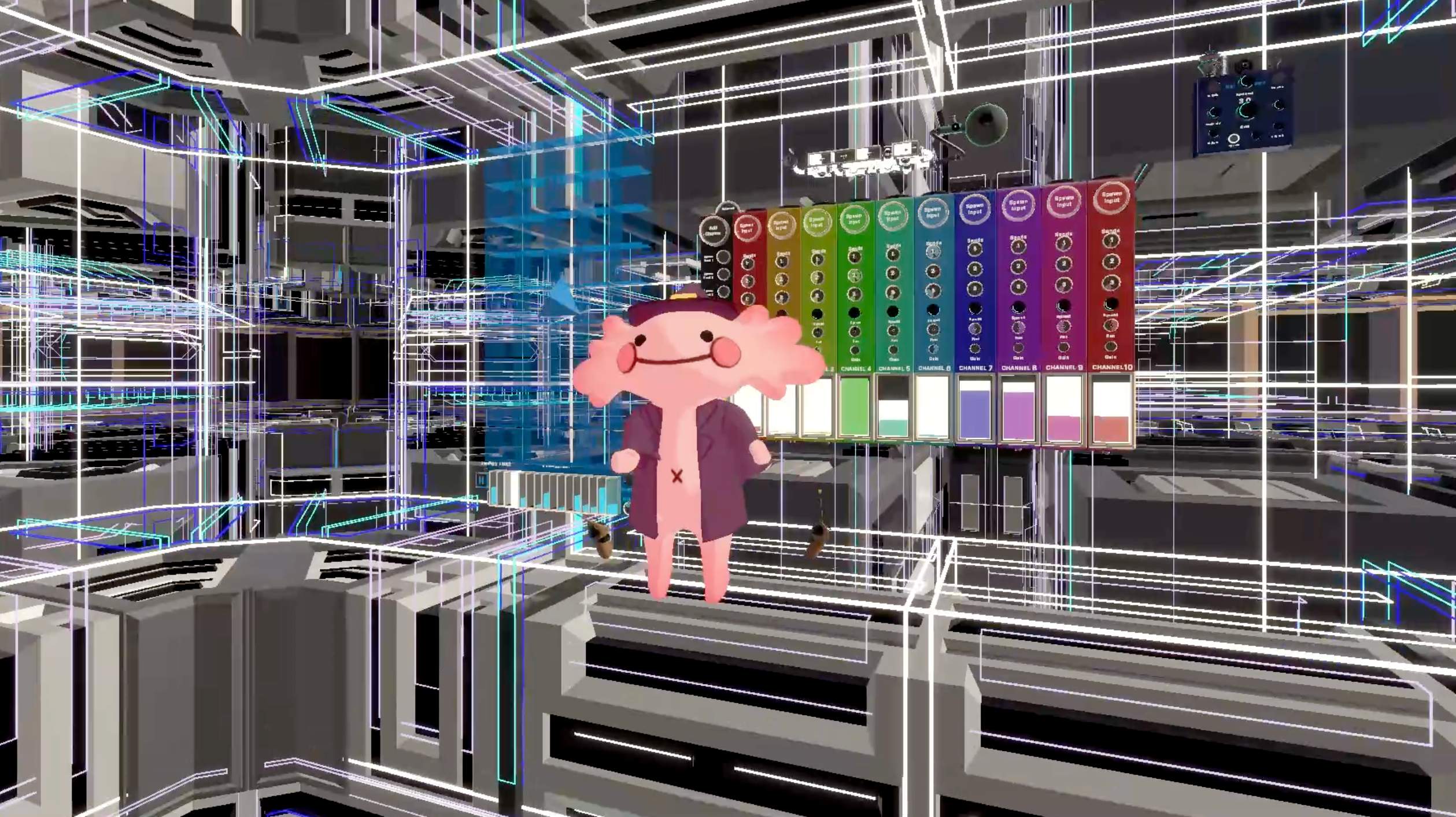
🎭 Custom Avatars - THIS IS AWESOME!!!!
Ready Player Me disappeared… and we had to rethink everything.
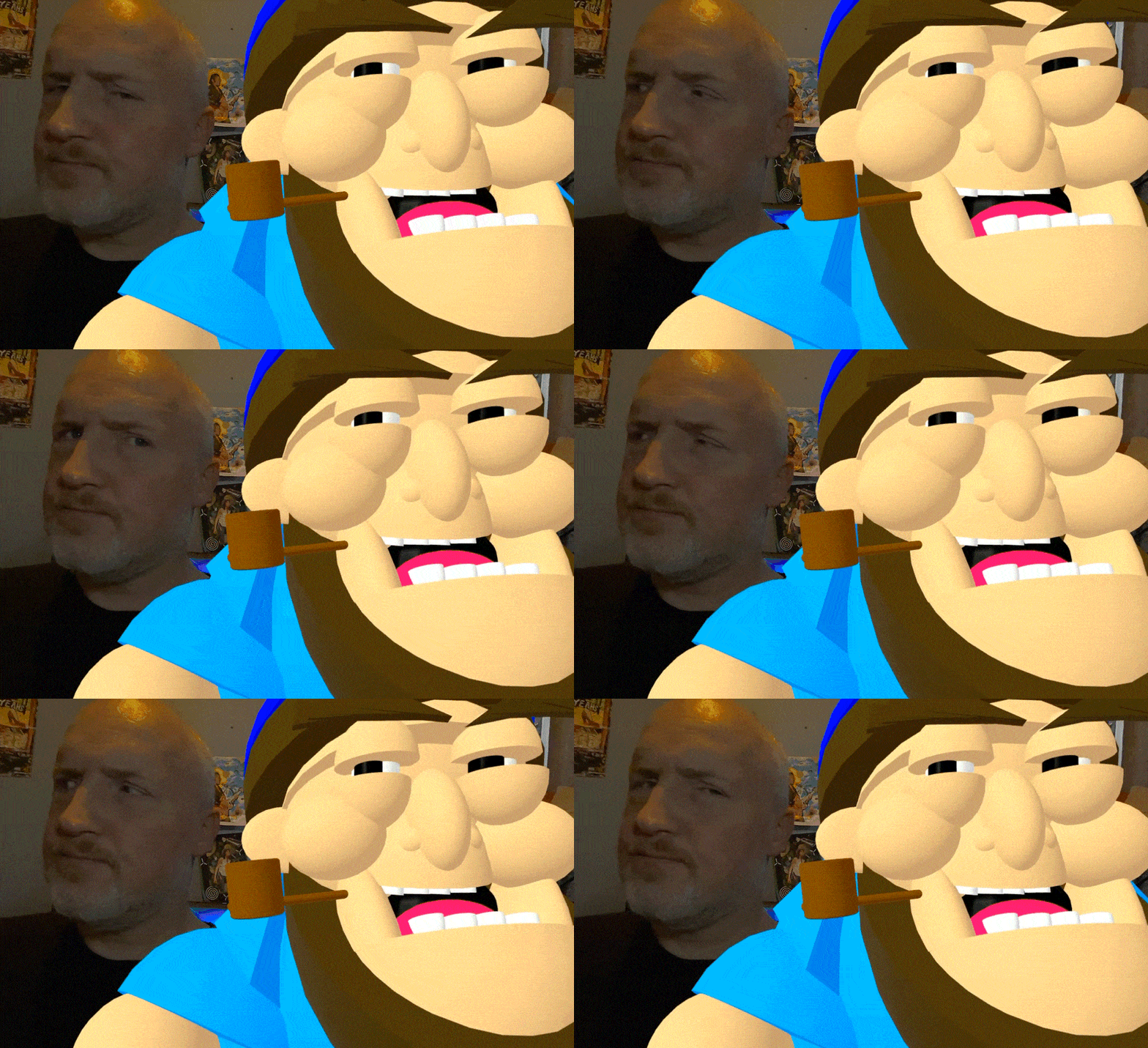
PatchWorld now supports custom VRM avatars — and honestly, it’s better.
You’re no longer choosing from a system.
You just show up as whatever you want.
And it changes the vibe a lot.
More expressive.
More personal.
More weird.
And honestly… way more fun.
PatchWorld keeps evolving with all of you.
If you haven’t explored this update yet, now is a good time!!