A Mixed Reality Concert Bridging Physical and Virtual Instruments
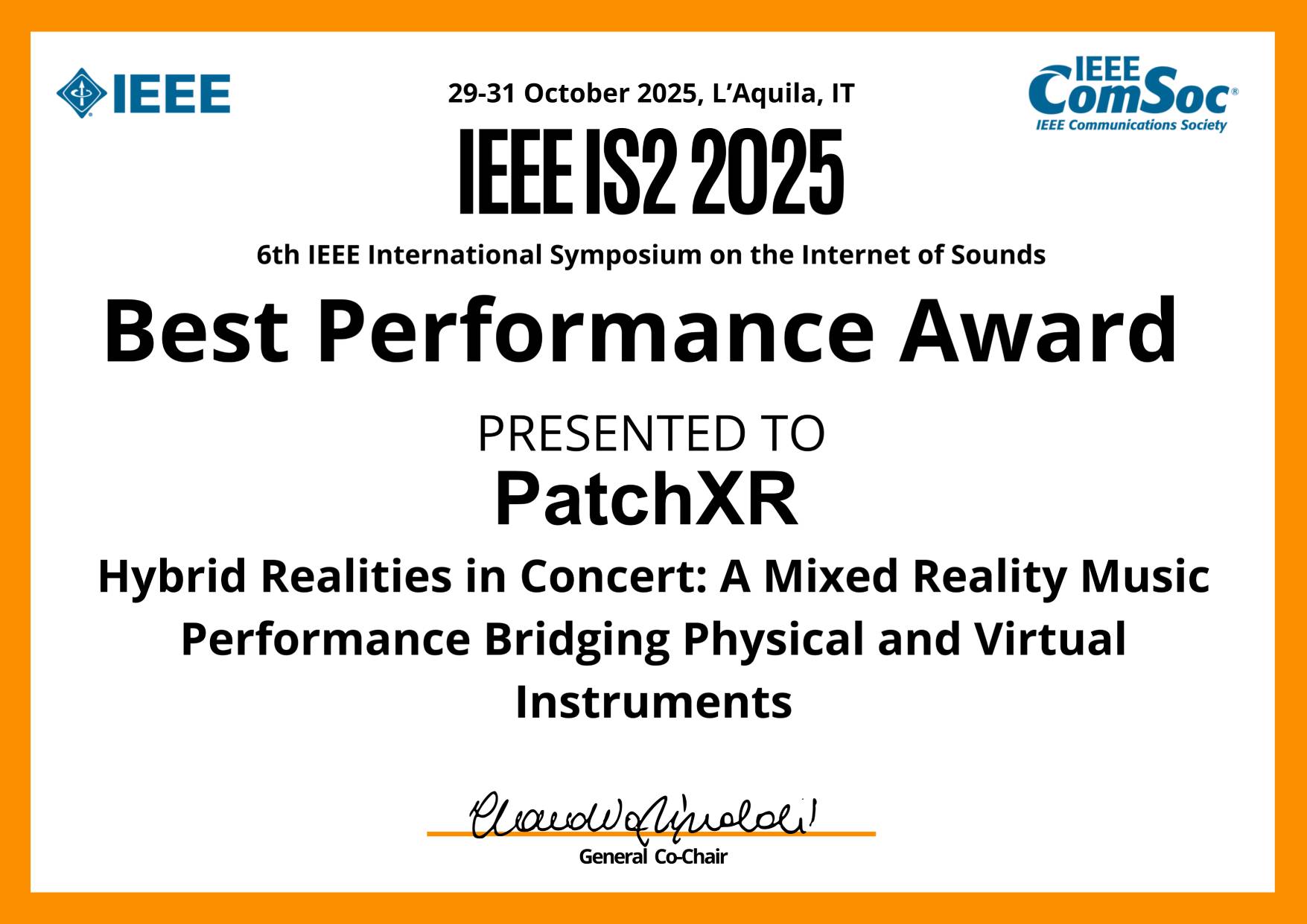
We’re proud to share that PatchXR received the Best Performance Award at the IEEE International Symposium on the Internet of Sounds (IS² 2025) for Hybrid Realities in Concert: Bridging Physical and Virtual Instruments.
The award was presented during the ElettroAQustica Festival in L’Aquila, Italy, where the artistic contributions of IS² 2025 were showcased as part of a public concert hosted at the Conservatorio “A. Casella”. This recognition celebrates not only the artistic quality of the performance, but also a broader shift currently unfolding in immersive media: mixed reality is becoming a stable, expressive medium for live music performance and not just an experimental prototype.
A Concert Between Two Worlds
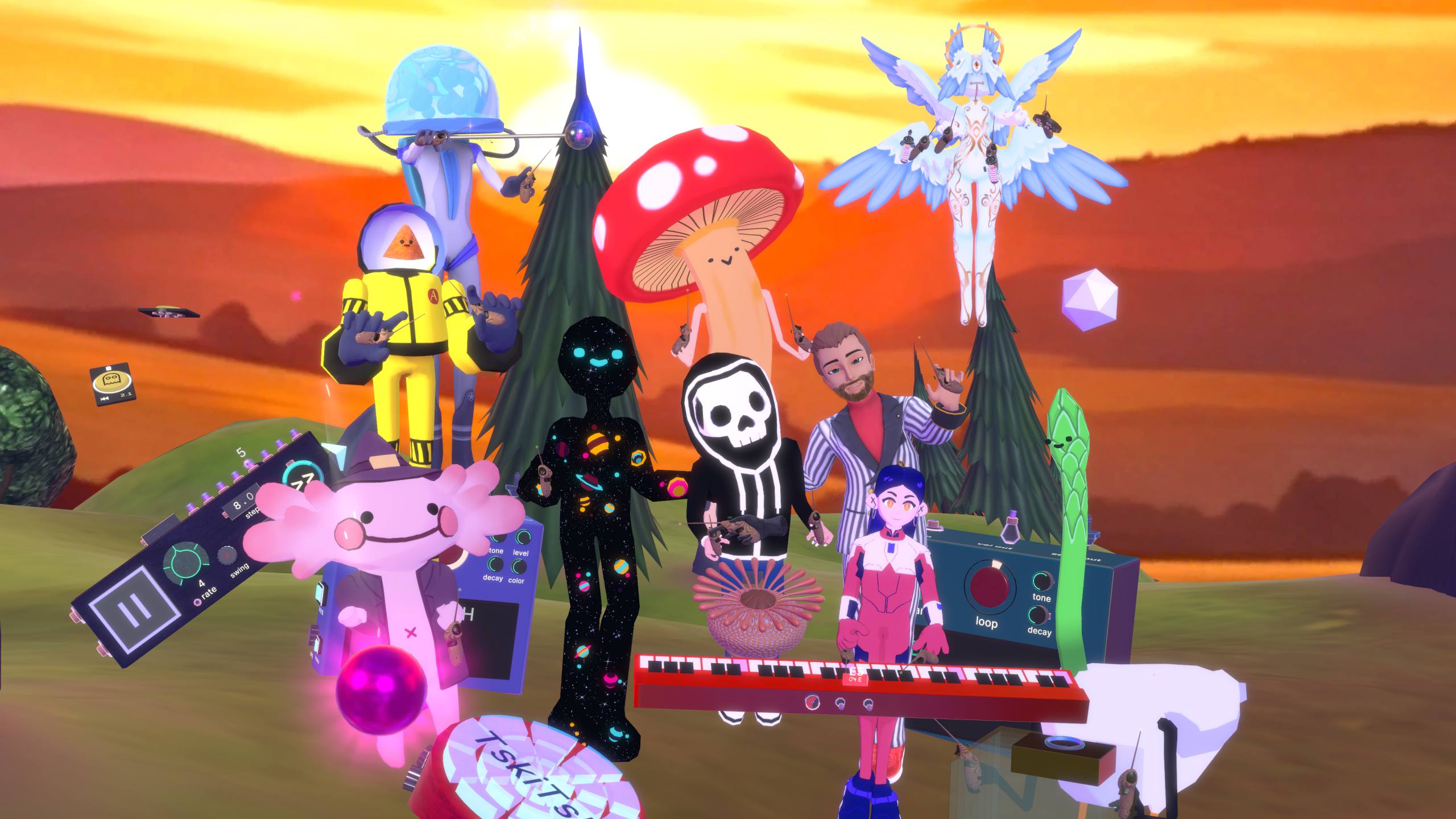
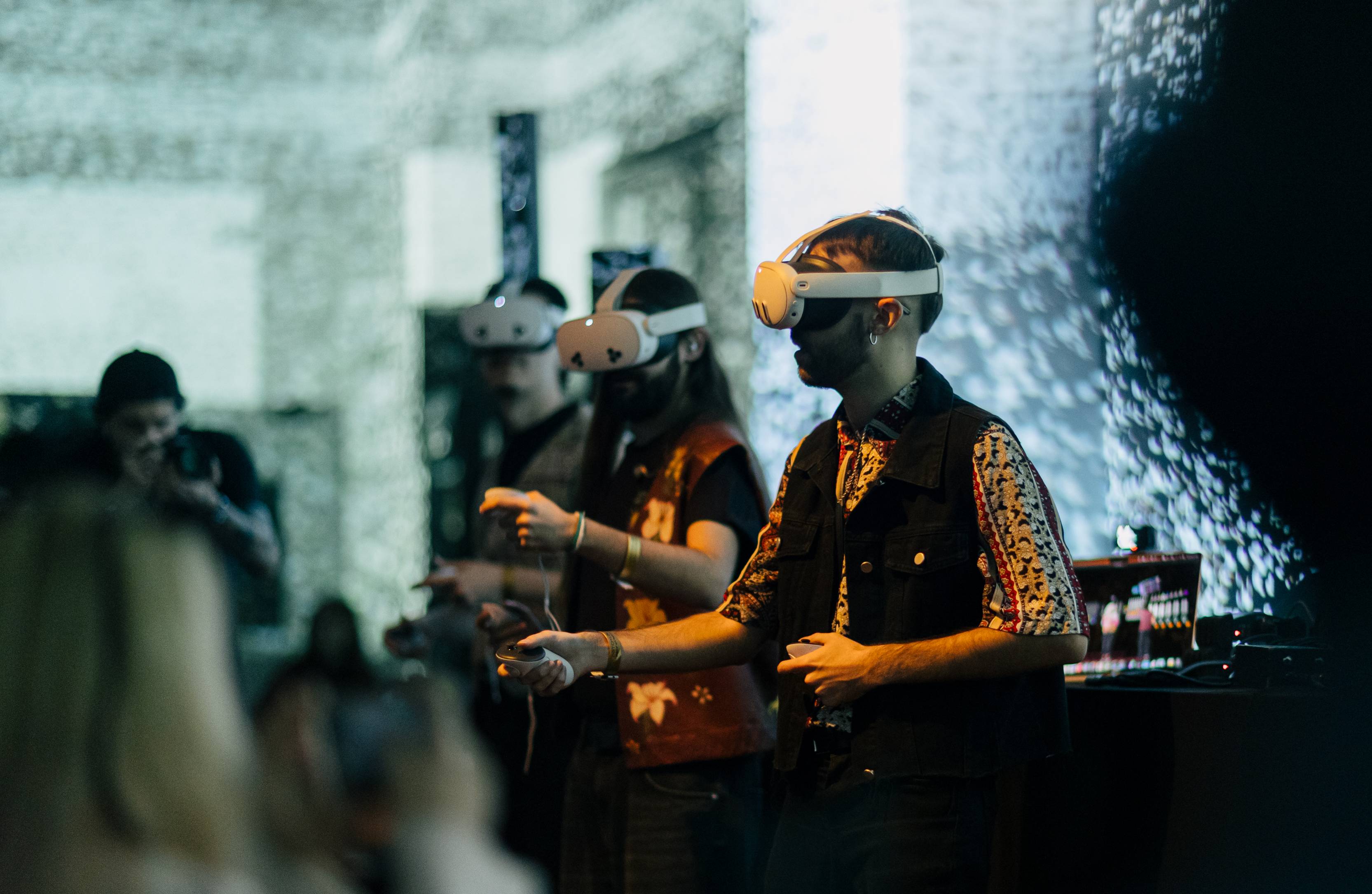
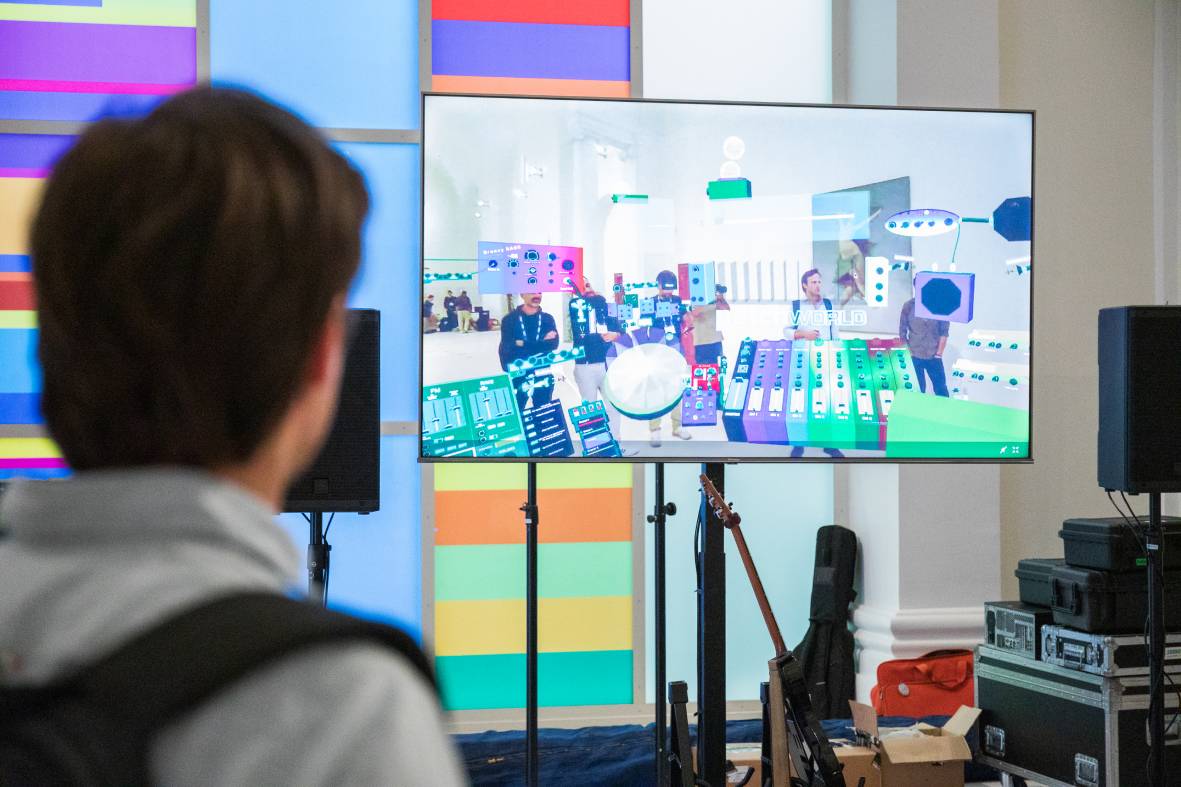
The awarded performance brought together two performers sharing a single musical moment across physical and virtual space. Gad Baruch Hinkis, co-founder of PatchXR and an established music producer, performed in VR using a virtual setup inside PatchWorld. He was accompanied by live electric and synth guitar playing, performed by cross-genre producer and multi-instrumentalist Metasoliton. The duo had met in Berlin several years ago, but this event marked their first ever collaborative performance.
Rather than treating VR as a visual add-on, PatchWorld functioned as a live instrument and performance environment. The audience experienced a unified concert where acoustic and virtual instruments coexisted seamlessly, spatial audio played an active musical role, and the boundary between stage and virtual space dissolved.
This hybrid setup allowed physical gestures and virtual interactions to respond to one another musically, creating a performance that could not exist in either space alone. PatchWorld is not about replacing traditional instruments or concert formats — it’s about extending them, creating shared spaces where musicians, researchers, and audiences can explore sound in new ways, across distance, discipline, and medium.
Why It Stood Out at IS²
According to Claudia Rinaldi, local chair of IS², what made the performance particularly compelling was its maturity as a medium:
“What impressed me most was the fact that the performance showed mixed reality can be a stable performance medium, not just an exploratory prototype.”
This distinction is especially meaningful in the context of IS², an international IEEE symposium focused on the Internet of Sounds, where sound, networks, interaction, and technology converge. The performance demonstrated that mixed reality can support reliable, repeatable live concerts while still leaving room for improvisation, expressivity, and human presence.
Reflecting on the symposium more broadly, Rinaldi also noted a clear trend this year:
“Integrated, human-centered immersive audio systems are moving from prototypes to practical workflows.”
This shift from experimentation to real-world use reflects what PatchWorld already is: a living platform shaped by a community of real people, creators, musicians, sound designers, hobbyist, and curious newcomers, using it every day to learn, create, perform, and expend their possibilities together.
From Research to the Stage
The concert took place within the ElettroAQustica Festival, a long-running event dedicated to electroacoustic music and sound experimentation, and was presented as part of the artistic program of IS².
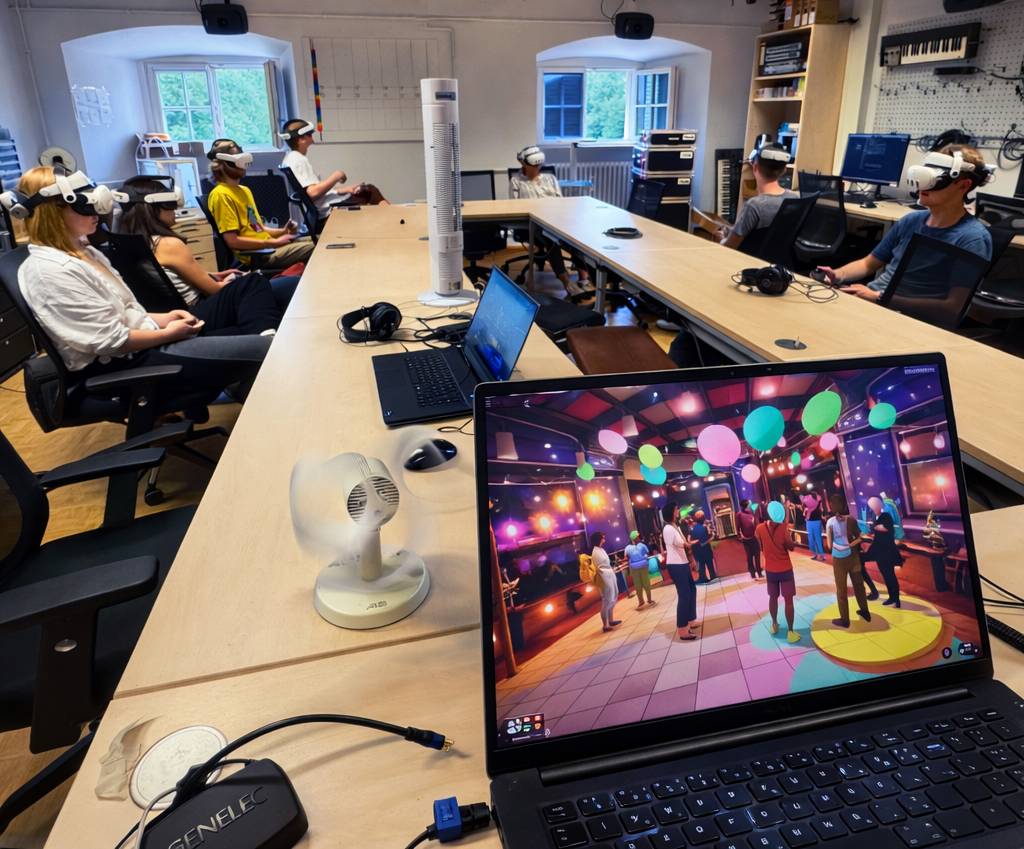
This performance is a direct outcome of the research and co-design activities carried out within MUSMET (Musical Metaverse Made in Europe). Some of the virtual instruments and interaction paradigms used on stage were developed through collaborative design processes involving musicians, researchers, and developers, exploring how mixed reality can support expressive, human-centered musical performance.
The concert demonstrates how XR tools can meaningfully support collaboration between remote and local performers, extend instrumental practice beyond physical constraints, and remain grounded in embodied human expression rather than technical spectacle.